
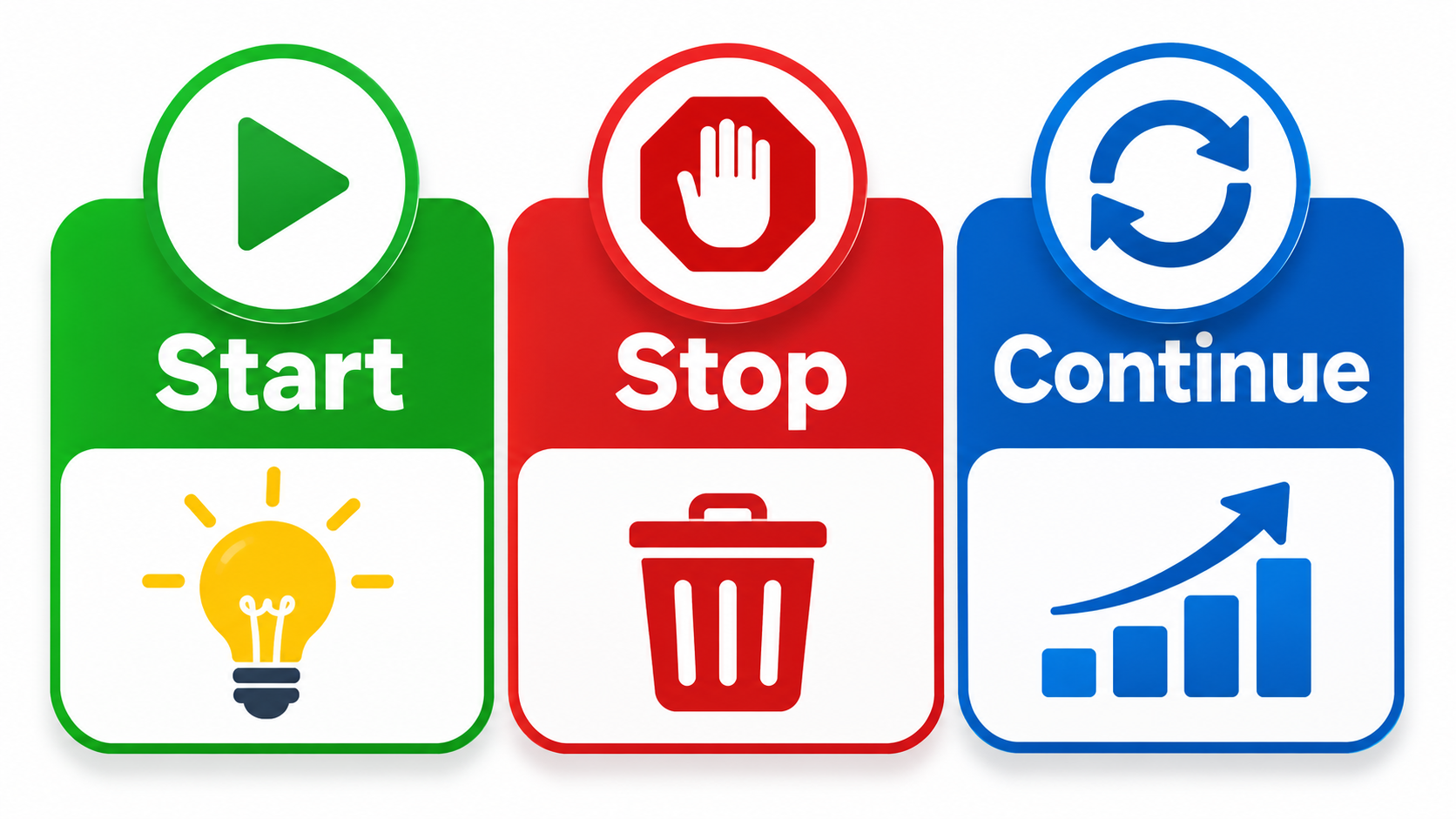
Improving team performance can be difficult when employees don’t know which habits to change. Without clear feedback, organizations often repeat mistakes and miss opportunities for growth. Start stop continue analysis offers a simple solution by identifying actions to begin, behaviors to eliminate, and successful practices to maintain. This structured approach helps individuals and teams make meaningful improvements.
What Is Start Stop Continue Analysis?
Start stop continue analysis is a feedback and evaluation technique used to improve performance, productivity, and teamwork.
The framework divides feedback into three categories:
- Start: New actions or practices that could improve results.
- Stop: Unproductive activities or behaviors that should end.
- Continue: Successful practices that deserve to be maintained.
Businesses, managers, teachers, and project teams use this method to evaluate progress and identify opportunities for improvement.
How Does Start Stop Continue Analysis Work?
The framework encourages participants to reflect on their current activities and suggest practical changes.
1. Start: Identify New Opportunities
The Start category focuses on activities that individuals or teams should introduce.
For example, a marketing team might begin holding weekly planning meetings or tracking campaign performance more consistently.
The goal is to discover valuable actions that can improve future results.
2. Stop: Eliminate Unproductive Habits
The Stop category identifies behaviors, processes, or activities that waste time or reduce effectiveness.
Examples include unnecessary meetings, poor communication, and repeated administrative tasks.
Removing these obstacles helps teams focus on important responsibilities.
3. Continue: Maintain Successful Practices
The Continue category highlights existing activities that produce positive outcomes.
These might include effective communication, employee recognition, or regular customer feedback.
Maintaining successful practices ensures that improvements do not replace activities that already work.
Start Stop Continue Analysis Examples
The following example demonstrates how a workplace team can apply this framework.
| Start | Stop | Continue |
|---|---|---|
| Weekly progress meetings | Unnecessary emails | Open communication |
| Employee training | Delayed feedback | Team collaboration |
| Clear performance goals | Repeated manual tasks | Customer support |
| Regular project reviews | Ineffective meetings | Recognizing achievements |
This approach transforms general feedback into practical recommendations.
How to Conduct a Start Stop Continue Analysis
Organizations can complete this exercise through a few straightforward steps.
- Define the objective: Choose a project, process, or performance area to evaluate.
- Gather feedback: Invite participants to share suggestions for each category.
- Discuss recommendations: Identify common concerns and improvement opportunities.
- Prioritize actions: Select changes that offer the greatest potential benefits.
- Assign responsibilities: Decide who will implement each recommendation.
- Review progress: Evaluate results during future meetings.
Encouraging honest, respectful feedback helps participants contribute meaningful ideas.
Benefits of Start Stop Continue Analysis
This method offers several advantages for workplace development.
Improved communication: Employees can express concerns and offer constructive suggestions.
Better productivity: Teams identify inefficient activities and develop more effective processes.
Stronger collaboration: Shared discussions encourage accountability and teamwork.
Continuous improvement: Regular evaluations help organizations adjust their strategies.
Clearer priorities: Managers can focus resources on actions that support measurable goals.
Common Mistakes to Avoid
A successful analysis requires specific feedback rather than vague opinions.
Avoid blaming individuals, ignoring suggestions, or introducing too many changes simultaneously.
Instead, focus on observable behaviors, realistic improvements, and measurable outcomes.
Final Thoughts
Start stop continue analysis provides a practical way to evaluate performance and encourage positive change.
By identifying what to start, stop, and continue, teams can strengthen communication, eliminate unnecessary activities, and maintain successful habits.
Regular use of this framework supports better decision-making, employee engagement, and long-term organizational improvement.
